

Editorial Disclaimer: Smart Update24 verifies information through official websites, government notifications, and trusted sources before publication. Our team also conducts independent research and analysis to provide accurate information to readers; however, users are advised to verify important details from the respective official websites for final confirmation.
Bangla Shasya Bima Registration 2026: Bangla Crop Insurance for a token amount of just Rs. 1. Learn the step-by-step registration process via mobile to secure financial protection in case of crop loss.
Farmers in West Bengal can protect their crops from losses caused by natural disasters through the Bangla Shasya Bima (BSB) scheme. The crop insurance programme is designed to provide financial support when insured crops suffer damage due to covered natural risks.
For farmers planning to register, knowing the application process, required documents and payment requirements is important. Here is a simple step-by-step guide based on the registration information available for the scheme.

What is Bangla Shasya Bima?
Bangla Shasya Bima is a crop insurance initiative for farmers in West Bengal. Under the scheme, eligible farmers can insure selected crops and receive financial protection against eligible crop losses.
The registration process requires farmers to provide their identity, land, crop and bank account details. The exact crops, areas and application deadlines can vary, so farmers should check the latest official notification before applying.
Bangla Shasya Bima Registration Process: Step-by-step
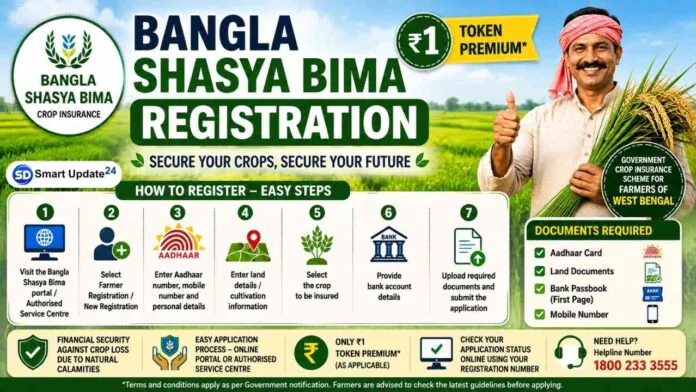
The registration process can be completed through the Bangla Shasya Bima application portal or an authorised service centre.
Step 1: Visit the application portal
Farmers first need to visit the Bangla Shasya Bima application portal or an authorised service centre to begin the registration process.
Step 2: Select Farmer Registration (https://banglashasyabima.wb.gov.in/)
Choose the Farmer Registration/New Registration option and start the application.
Step 3: Enter Aadhaar and personal details
The farmer needs to provide details such as:
- Aadhaar number
- Mobile number
- Other required personal information
The details should be entered carefully because incorrect information can create problems during verification or claim settlement.
Step 4: Enter land details
Information about the farmer’s agricultural land needs to be provided. Relevant land records or cultivation-related details may be required during the application.
Farmers should make sure that the land information entered in the application matches their supporting documents.
Step 5: Select the crop
The applicant needs to select the crop being cultivated for which insurance coverage is being sought.
Since insurance coverage can depend on the notified crop and area, farmers should check whether their crop is covered under the current notification before submitting the application.
Step 6: Provide bank account information
The farmer’s bank account details must be entered correctly. The image indicates that bank account information should be provided as part of the registration process.
It is important to double-check the account details before submission because incorrect banking information could cause difficulties when receiving eligible benefits.
Step 7: Upload the required documents
The registration process may require documents relating to identity, land, cultivation and banking information.
Commonly mentioned documents include:
- Aadhaar card
- Land documents or cultivation-related records
- First page of the bank passbook
- Mobile number
Applicants should keep clear copies of the required documents ready before starting the registration.
Is there a Rs.1 premium?
The registration information highlights a ₹1 token premium for the applicable farmer registration process. However, farmers should not assume that the same payment or eligibility condition applies to every crop and location.
Before making any payment, applicants should verify the current government notification and the applicable terms for their crop and area.
What happens after submitting the application?
After completing the registration, farmers should save the Application or Registration Number generated by the system.
This number can be useful for checking the application status and for future communication regarding the insurance registration.
Farmers can subsequently check their Bangla Shasya Bima status online. If they face difficulties, they can seek assistance through an authorised Bangla Sahayata Kendra or the designated support channel.
Also Read: WB Ayushman Bharat Card Benefits 2026 | From August 16, 0 3.4 Crore People to Get Health Coverage
Bangla Shasya Bima Registration: Documents farmers should keep ready
Before applying, it is better to keep the following information and documents available:
- Aadhaar Card:
Used for identity-related verification. - Land documents:
Relevant land or cultivation records may be required. - Bank passbook:
The first page containing the account details should be kept ready. - Mobile number:
A working mobile number may be required for communication and verification.
Farmers should ensure that the names and other important details are consistent across their documents wherever applicable.
Important points before registration
Farmers should keep a few things in mind before submitting the Bangla Shasya Bima application:
- Check whether the particular crop is covered under the current notification.
- Confirm whether applications are open for the concerned district and crop.
- Apply before the notified deadline.
- Enter Aadhaar, land and bank details carefully.
- Upload clear and valid documents.
- Save the application or registration number after submission.
- Check the application status after registration.
- Keep a copy or screenshot of the submitted application for future reference.
What if there is a crop loss?
If an insured crop suffers damage because of an eligible natural event covered under the scheme, the farmer may be entitled to compensation subject to the applicable rules, assessment and verification.
Simply registering for crop insurance does not automatically guarantee compensation. The loss must fall within the coverage conditions, and the claim process must follow the applicable government guidelines.
Farmers should verify the latest notification
Crop insurance rules, covered crops, districts, deadlines and other conditions can change from one season to another. Therefore, farmers should always check the latest official Bangla Shasya Bima notification before submitting an application or making any payment.
The safest approach is to use the official portal or an authorised government service centre rather than relying only on social media posts or unofficial websites.
Bangla Shasya Bima can provide an important financial safety net for farmers when insured crops are affected by eligible natural disasters. The registration process requires basic personal, Aadhaar, land, crop and bank information, followed by document submission and application confirmation.
Farmers planning to apply should complete the registration within the notified period, keep their application number safely and verify all details before submitting the form. Most importantly, they should check the latest official notification for the current season because eligibility, crops, deadlines and other conditions may change.
