

Editorial Disclaimer: Smart Update24 verifies information through official websites, government notifications, and trusted sources before publication. Our team also conducts independent research and analysis to provide accurate information to readers; however, users are advised to verify important details from the respective official websites for final confirmation.
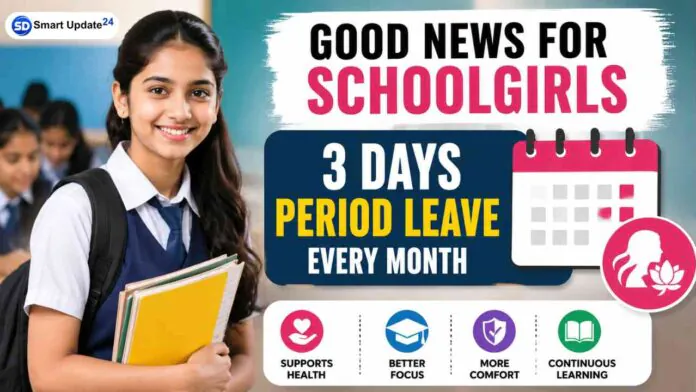
Menstrual Dignity Scheme: Considering the physical and mental well-being of female students, the Kerala government has taken a historic decision to grant three days of menstrual leave every month.

Governor Rajendra Vishwanath Arlekar announced the launch of this special ‘Menstrual Dignity Scheme’ during the policy address of the state’s new UDF government. To ensure that their studies do not suffer due to the leave, special ‘catch-up’ classes will be arranged for the students on Saturdays and Sundays.
Under this scheme, the availability of sanitary napkins and essential supplies will be ensured, alongside the construction of improved restroom facilities in educational institutions and public places.

This initiative by the South Indian state is being praised across the country for its efforts to secure the future of women and eliminate gender disparity in the workplace.
The initiative is being viewed as an important step toward recognizing the physical and emotional challenges many girls face during their menstrual cycle while ensuring that their educational journey remains supportive and inclusive.
Menstrual Dignity Scheme: Why Menstrual Leave for Schoolgirls Matters
For many school-going girls, menstruation can bring discomfort, pain, fatigue, and emotional stress. Despite these challenges, students often feel pressured to attend classes due to academic commitments and attendance requirements.
Health experts have long argued that creating a supportive environment for girls during menstruation can help improve both their physical well-being and educational experience.
A structured menstrual leave policy could allow students to rest when necessary without the fear of being penalized for absence.
A Step Toward Menstrual Health Awareness
The discussion around period leave goes beyond granting days off from school. It highlights the growing recognition of menstrual health as an important public issue rather than a topic surrounded by stigma and silence.
Advocates believe such measures can:
- Promote menstrual health awareness
- Reduce stress and anxiety among students
- Encourage open conversations about women’s health
- Support girls facing severe menstrual discomfort
- Create a more inclusive educational environment
Menstrual Dignity Scheme: Focus on Student Welfare
Education experts emphasize that academic success should go hand in hand with student welfare. Schools are increasingly being encouraged to address health-related challenges that affect attendance and classroom performance.
In addition to leave provisions, many experts suggest improving school infrastructure by ensuring:
- Clean and hygienic washrooms
- Access to sanitary products
- Proper sanitation facilities
- Menstrual health education programs
These measures can significantly improve the school experience for adolescent girls.
Reactions from Parents and Educators
The proposal has received mixed but largely positive responses from parents, teachers, and healthcare professionals.
Supporters argue that recognizing menstrual health challenges is a progressive step that acknowledges the realities faced by millions of students. They believe such policies can reduce absenteeism caused by menstrual discomfort while promoting dignity and well-being.
Others stress the importance of implementing awareness programs alongside any leave policy to ensure students receive accurate information about menstrual health and hygiene.
Also Read: PM-AJAY Portal and AJAY Mobile App Launched: Features, Benefits, Objectives and How It Works
Growing Global Conversation on Period Leave
Around the world, discussions about menstrual leave have gained momentum in recent years. Several organizations and institutions have explored policies designed to support women and girls experiencing menstrual health issues.
Introducing similar initiatives in educational settings reflects a broader effort to create environments where health concerns are understood and accommodated rather than ignored.
Looking Ahead
Whether implemented as a formal policy or as part of broader student welfare reforms, the conversation around menstrual leave signals a shift toward greater awareness of girls’ health needs in schools.
Supporters believe that addressing menstrual health openly can help create a more compassionate and student-friendly education system, where girls can focus on learning without compromising their health.
Know More: https://www.instagram.com/p/DZDEcSeFHhR/?igsh=anhjdzJrMGE2bXhs
