

Editorial Disclaimer: Smart Update24 verifies information through official websites, government notifications, and trusted sources before publication. Our team also conducts independent research and analysis to provide accurate information to readers; however, users are advised to verify important details from the respective official websites for final confirmation.
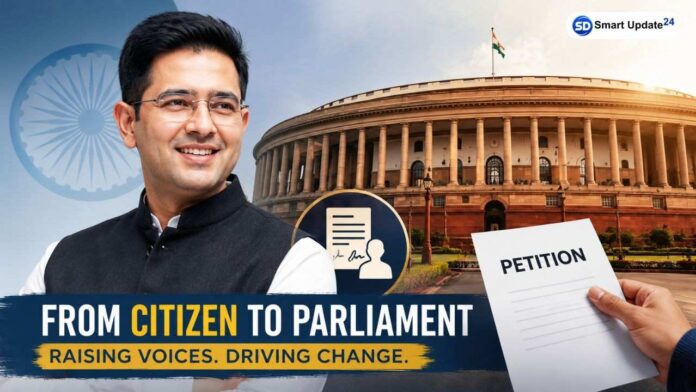
Raghav Chadha Appointed Chairman of Rajya Sabha Petitions Committee: In a development that could strengthen citizen participation in governance, Rajya Sabha Member of Parliament Raghav Chadha has been appointed as the Chairman of the Rajya Sabha Petitions Committee. A mechanism through which ordinary citizens can formally place their concerns before Parliament. The committee reviews petitions related to government policies, public issues, and administrative matters, and can recommend corrective action where needed. From public concern to parliamentary attention.

The committee serves as an important bridge between ordinary citizens and Parliament, allowing public concerns to reach the national legislative platform through an official process.
The move has drawn attention because the committee offers a structured mechanism through which people can raise concerns on matters affecting society, administration, public services, and governance.

Raghav Chadha Appointed Chairman of Rajya Sabha: What is the Rajya Sabha Petitions Committee?
The Petitions Committee is a parliamentary body that examines petitions submitted by citizens regarding public matters. Instead of limiting public discussions to social media platforms or online debates, this system gives individuals a formal democratic channel to present issues before Parliament.
The Rajya Sabha’s Petitions Committee, chaired by Raghav Chadha, allows citizens to officially bring important public matters to Parliament’s notice. Whether it’s issues with laws, governance, or administration, petitions are examined and recommendations may be made for reforms or action.
An official democratic route beyond social media debates.
Citizens can use petitions to highlight concerns related to:
- Government decisions and policies
- Administrative issues
- Public grievances
- Existing laws and regulations
- Matters requiring policy changes or reforms
The committee studies these submissions and can suggest recommendations for further action or improvements.
How Does the Committee Function?
The committee’s role goes beyond simply collecting public complaints. Once petitions are submitted, they undergo examination and review. If necessary, officials or departments may be asked for explanations or responses.
The process can involve:
- Reviewing concerns raised by citizens
- Investigating complaints and requests
- Seeking responses from relevant authorities
- Suggesting corrective or reformative measures
Although the committee itself does not directly implement policy changes, its observations and recommendations can influence discussions and decisions within Parliament.
Raghav Chadha Appointed Chairman of Rajya Sabha: Why This Appointment Matters
The appointment of Raghav Chadha as Chairman places him in a position to oversee the handling and review of petitions submitted by citizens.
The committee acts as a connection between public voices and legislative discussion. In a democratic system, such platforms become important because they provide people with an official route to communicate concerns rather than relying only on public campaigns or online conversations.
As public participation increasingly expands into digital spaces, institutional mechanisms such as parliamentary petitions continue to remain an important part of democratic functioning.
Also Read: Kerala Ministers List 2026: Full Congress-Led UDF Cabinet List Under CM V.D. Satheesan
Beyond Social Media: A Formal Route for Public Participation
In recent years, many public concerns have gained visibility through social media discussions. However, online attention does not always translate into formal policy consideration.
The Petitions Committee creates a direct pathway for issues to be documented, examined, and potentially discussed within parliamentary processes. It allows citizens to move beyond hashtags and online debates toward a recognized constitutional framework.
For many people, this mechanism represents more than a complaint system. It is an opportunity to place public issues before decision-makers through a process designed within the parliamentary structure itself.
Citizen Voices and Parliamentary Accountability
Democracy functions most effectively when institutions and citizens remain connected. The Rajya Sabha Petitions Committee serves as one of those links, ensuring that public concerns can receive attention at the highest legislative level.
With new leadership in place, attention may now turn toward how effectively the committee processes petitions and addresses matters that affect everyday citizens across the country.
